Understanding Central Sensitisation
Claire Feldkamp
2/23/20265 min read
If you live with persistent pain, fatigue, or other long-lasting unexplained symptoms, you may have encountered the term central sensitisation. It is a phrase that appears frequently in discussions of chronic pain, yet it is often poorly explained or misunderstood.
Before exploring the concept, it is important to establish something fundamental: Pain is real. Pain is not “imaginary,” “exaggerated,” or “all in your head.” Pain is a genuine and complex experience generated by the nervous system. No external observer - clinician, family member, or test result - can determine whether your pain is valid. It is always real to the person experiencing it (IASP, 2020).
Pain is also highly individual. It is influenced not only by tissue health, but by the way the nervous system processes information, as well as by emotions, stress, past experiences, and environmental factors.
What is Central Sensitisation?
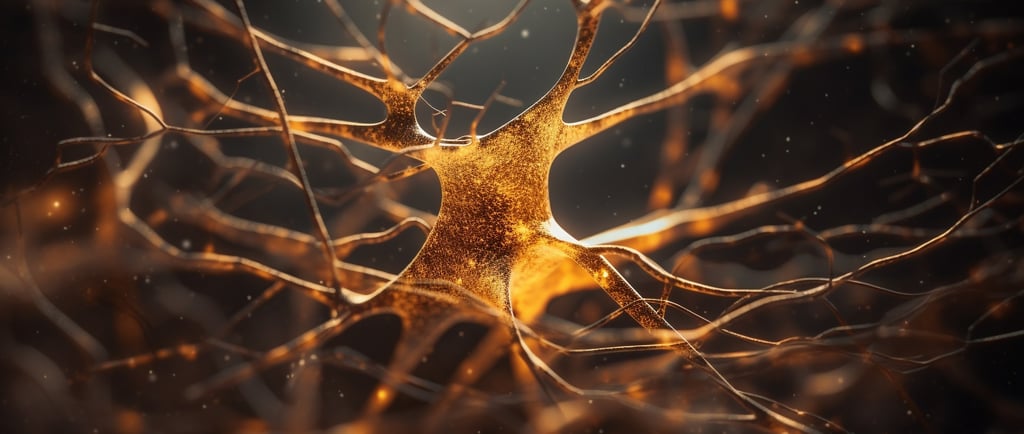
Central sensitisation refers to a state in which the central nervous system (CNS) — the brain and spinal cord — becomes more sensitive and reactive.
Modern pain science has shown that the CNS is not a passive receiver of pain signals. Instead, it is dynamic and adaptable. In some circumstances, it undergoes structural, functional, and chemical changes that increase its responsiveness to sensory input (Woolf, 2011).
When central sensitisation occurs, sensory signals may be amplified, pain thresholds may decrease, normal sensations may feel uncomfortable or painful, and pain may persist beyond expected healing times. In simple terms, the nervous system becomes highly protective, behaving as though the body is under ongoing threat even when there is no clear evidence of tissue damage.
A Sensitive Nervous System
One of the key features of central sensitisation is that many different stimuli can trigger symptoms. These triggers are not limited to physical injury but may include light touch, movement, environmental changes, internal bodily sensations, and emotional stressors. What would normally be processed as neutral input may instead be interpreted by the nervous system as threatening or painful (Nijs et al., 2021). This does not mean symptoms are psychological. It means the nervous system has become more reactive.
How Does Central Sensitisation Affect Pain?
Central sensitisation alters the way the nervous system processes and interprets sensory information rather than simply increasing pain intensity. People may find that pain feels disproportionate to any identifiable injury, persists beyond expected healing times, or spreads beyond its original location. Sensations that were previously comfortable — such as light touch or gentle pressure — can become unpleasant or painful. These changes reflect an amplification of neural signalling within the central nervous system, not imagined symptoms (Woolf, 2011; Nijs et al., 2021).
The “Trifecta” of Central Sensitisation
Central sensitisation is often associated with three overlapping clinical features:
Hyperalgesia - an exaggerated response to stimuli that are normally painful.
Allodynia - pain provoked by stimuli that are typically non-painful, such as light touch or clothing.
Global sensory hyperresponsiveness - involves heightened sensitivity to stimuli including light, sound, smells, temperature, medications, and internal sensations (Nijs et al., 2021).
Conditions Associated with Central Sensitisation
Central sensitisation is not a diagnosis in itself but a mechanism believed to contribute to several chronic conditions. These include fibromyalgia, chronic migraine, irritable bowel syndrome (IBS), temporomandibular disorders, complex regional pain syndrome (CRPS), and myalgic encephalomyelitis / chronic fatigue syndrome (ME/CFS). It may also coexist with inflammatory or structural conditions such as osteoarthritis, rheumatoid arthritis, systemic lupus erythematosus (SLE), and hypermobility spectrum disorders (Clauw, 2015; Nijs et al., 2021).
Why Does This Matter?
Chronic pain is extremely common and has a profound impact. In the UK, approximately 43% of adults live with chronic pain, and around 8 million people experience pain that is moderate to severely disabling (Faculty of Pain Medicine, 2024). Chronic pain can affect physical functioning, sleep, emotional wellbeing, employment, finances, and relationships. Despite its prevalence, chronic pain remains widely misunderstood, and many individuals report feeling dismissed or not believed (Nijs et al., 2021).
Chronic pain can be particularly challenging to manage within a purely biomedical model, which primarily focuses on tissue damage and structural pathology. While this approach is essential for many conditions, it does not fully account for the complex neurophysiological and psychosocial mechanisms involved in persistent pain. As a result, many people with chronic pain struggle to access appropriate support and guidance to understand what is happening in their bodies and to identify strategies that may help reduce the intensity and impact of their symptoms.
The Role of Pain Education
Pain neuroscience education (PNE) has emerged as an important component in the management of chronic pain. Research indicates that helping individuals understand the biology and neurophysiology of pain can improve pain-related knowledge, reduce fear, decrease catastrophising, and enhance engagement in rehabilitation and self-management strategies (Louw et al., 2016).
Central to this approach is the recognition that pain is not a simple measure of tissue damage, but a protective output of the nervous system influenced by sensory input, prior experiences, emotions, beliefs, and context (Moseley, 2007; Moseley and Butler, 2017). Education therefore aims to reconceptualise pain rather than dismiss it. It validates the experience while explaining why pain can persist in the absence of ongoing injury.
Lorimer Moseley’s work has been particularly influential in this field. His research has demonstrated that when patients develop a clearer understanding of how pain is produced and modulated by the nervous system, they often experience reductions in pain-related distress, improved movement confidence, and better functional outcomes (Moseley, 2003; Moseley, 2007). Importantly, these benefits are associated not with suggesting that pain is psychological, but with explaining the neurobiological processes underlying pain sensitivity.
Pain education can help people make sense of common features of central sensitisation, such as heightened sensitivity, spreading pain, and fluctuating symptoms. By reducing the sense of threat associated with pain, education may help calm protective nervous system responses and improve confidence in movement and activity. It can also challenge unhelpful beliefs — for example, the idea that “hurt always equals harm” — which may reduce fear, avoidance, and the cycle of deconditioning often seen in chronic pain (Louw et al., 2016; Moseley and Butler, 2017).
Pain neuroscience education is most effective when integrated with other therapeutic approaches, including hands-on bodywork, graded movement, psychological support, and lifestyle interventions. It is not a cure, but rather a foundation that supports safer, more confident engagement with rehabilitation and self-management.
How do we get unstuck?
Central sensitisation is not necessarily a permanent state. Because the nervous system is adaptable, it can also become less sensitive over time. Bodywork can provide non-threatening sensory input, movement can gradually restore confidence and normalise neural signalling, and mindfulness can reduce stress reactivity and improve the brain’s interpretation of bodily sensations. Together, these strategies do not “cure” pain, but they can play an important role in calming hypersensitivity, improving function, and supporting long-term symptom management (Nijs et al., 2021; Louw et al., 2016).
References
Clauw, D.J. (2015) ‘Diagnosing and treating chronic musculoskeletal pain based on the underlying mechanism’, Best Practice & Research Clinical Rheumatology, 29(1), pp. 6–19.
Faculty of Pain Medicine (2024) UK Pain Message Infographic 2024. Available at: https://fpm.ac.uk.
IASP (2020) IASP Revised Definition of Pain.
Louw, A., Zimney, K., Puentedura, E.J. and Diener, I. (2016) ‘The efficacy of pain neuroscience education on musculoskeletal pain’, Physiotherapy Theory and Practice, 32(5), pp. 332–355.
Nijs, J. et al. (2021) ‘Central sensitization in chronic pain conditions’, The Lancet Rheumatology, 3(5), pp. e383–e392.
Woolf, C.J. (2011) ‘Central sensitization: Implications for the diagnosis and treatment of pain’, Pain, 152(S3), pp. S2–S15.
Woolf, C.J. and King, A.E. (1989) ‘Dynamic alterations in the spinal cord following peripheral injury’, Pain, 36(3), pp. 295–302.
Opening Hours
Wednesday 9.30am to 7pm
Thursday 9.30am to 7pm
Friday 9.30am to 7pm
Saturdays by appointment
Areas I serve
Macclesfield
Poynton
Stockport
Wilmslow
Alderley Edge
© Claire Feldkamp 2026 |Terms & Conditions | Privacy Policy | Sitemap