Perceptions of the body in Eastern and Western bodywork
Claire Feldkamp
A few weeks ago, a client told me that their massage felt like a luxury and an indulgence. That simple remark made me pause. It made me reflect on how bodywork is viewed here in the West, and how different that perception is from the way touch and therapeutic massage are understood in many other parts of the world. I don’t see bodywork as a luxury. I see it as one of the most meaningful forms of self-care we can engage in, something fundamental to living well in the body we inhabit.
To understand why massage is so often framed as indulgent in Western culture, it helps to consider how Western and Eastern traditions differ in their understanding of the body, health and healing. Western biomedicine has historically developed around identifying pathology, isolating symptoms and applying targeted interventions. Health and disease are often defined in measurable, structural or biochemical terms. By contrast, many Eastern medical traditions conceptualise health as a dynamic state of balance that encompasses physical, emotional and environmental dimensions (World Health Organization, 2013). Rather than separating mind and body, they view the person as an integrated whole.
Bodywork in Eastern Traditions
In traditions such as Traditional Chinese Medicine and Ayurveda, bodywork is woven into the fabric of healthcare and daily life. Chinese medicine, for example, is rooted in the idea of Qi, or life-force energy, flowing through meridian pathways, with illness understood as imbalance or obstruction in this flow (World Health Organization, 2013). Manual therapies such as Tui Na are used not only to address discomfort but to restore harmony across bodily systems. Similarly, Ayurvedic practices such as Abhyanga use rhythmic oil massage to balance constitutional types and maintain systemic equilibrium. The emphasis is preventative as much as corrective.
This orientation towards balance rather than crisis intervention shapes how massage is perceived. In many parts of Asia, therapeutic touch is considered a normal and regular aspect of maintaining wellbeing, not something reserved for special occasions. Massage may begin in infancy and continue throughout life as part of routine care. The body is not something to be attended to only when it fails; it is something to be engaged with consistently.
Western Bodywork and Clinical Frameworks
Western massage therapy, on the other hand, evolved alongside anatomy, physiology and sports science. Modalities such as Swedish massage, deep tissue massage and sports massage tend to focus on muscular structures, circulation, tissue pliability and measurable physical outcomes. As a result, massage is frequently sought in response to specific problems: back pain, injury recovery or muscular tension.
Yet research increasingly suggests that massage has broader benefits than simple muscle relaxation. Systematic reviews indicate that massage therapy can be beneficial for subacute and chronic low back pain (Furlan et al., 2015), and randomised trials have demonstrated improvements in pain and function compared with usual care approaches (Sherman et al., 2011). Reviews of massage therapy research also report reductions in cortisol, improvements in mood and positive effects across a range of pain and stress-related conditions (Field, 2016). Major health bodies recognise massage as a complementary therapy that may support musculoskeletal health and stress reduction (NCCIH, 2023).
Towards an Integrated Understanding of Bodywork
While the evidence base varies in strength depending on condition and methodology, the consistent theme is that touch has physiological and psychological impact. When massage is framed purely as indulgence, its therapeutic potential risks being overlooked. When it is viewed as preventative care, it becomes something altogether different.
I believe there is a valuable middle ground between these perspectives. Western approaches offer detailed anatomical knowledge, clinical reasoning and an evolving research base. Eastern traditions offer a long-standing philosophy of balance, integration and ongoing care. Increasingly, healthcare discourse itself is moving towards more integrative and whole-person models (World Health Organization, 2013). In that sense, bodywork sits naturally within a broader understanding of health that includes physical, emotional and relational dimensions.
When massage becomes a regular practice rather than an occasional treat, something subtle shifts. We develop continuity with our bodies. We notice patterns earlier. We cultivate awareness rather than waiting for dysfunction. In this context, massage ceases to be a luxury and becomes what it perhaps always was: a way of maintaining relationship with the body we live in every day.
References
Field, T., 2016. Massage therapy research review. Complementary Therapies in Clinical Practice, 24, pp.19–31.
Furlan, A.D., Giraldo, M., Baskwill, A., Irvin, E. and Imamura, M., 2015. Massage for low-back pain. Cochrane Database of Systematic Reviews, Issue 9, CD001929.
National Center for Complementary and Integrative Health (NCCIH), 2023. Massage therapy: What you need to know. Bethesda, MD: U.S. Department of Health and Human Services. Available at: https://www.nccih.nih.gov/health/massage-therapy-what-you-need-to-know [Accessed 28 February 2026].
Sherman, K.J., Cherkin, D.C., Kahn, J., Erro, J., Hrbek, A., Deyo, R.A. and Eisenberg, D.M., 2011. A randomized trial comparing yoga, stretching, and a self-care book for chronic low back pain. Annals of Internal Medicine, 155(1), pp.1–9.
World Health Organization, 2013. WHO traditional medicine strategy 2014–2023. Geneva: World Health Organization.

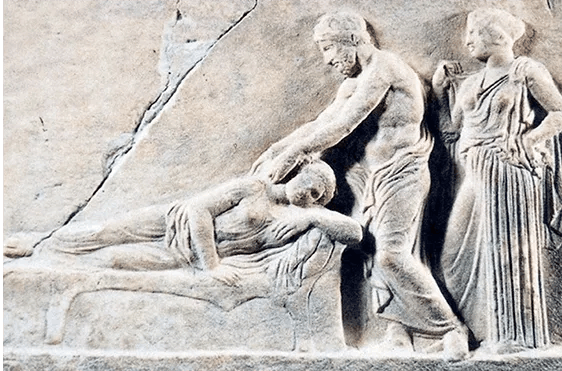
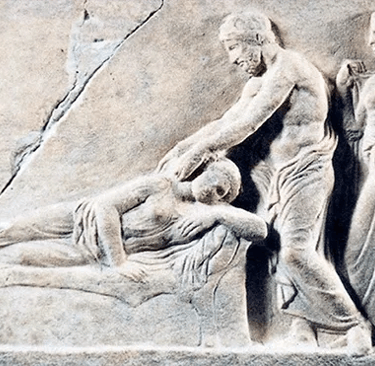
The photo is a relief of a female patient being touched by Aesculapius, the Greek god of medicine, dated to the 4th century BC.
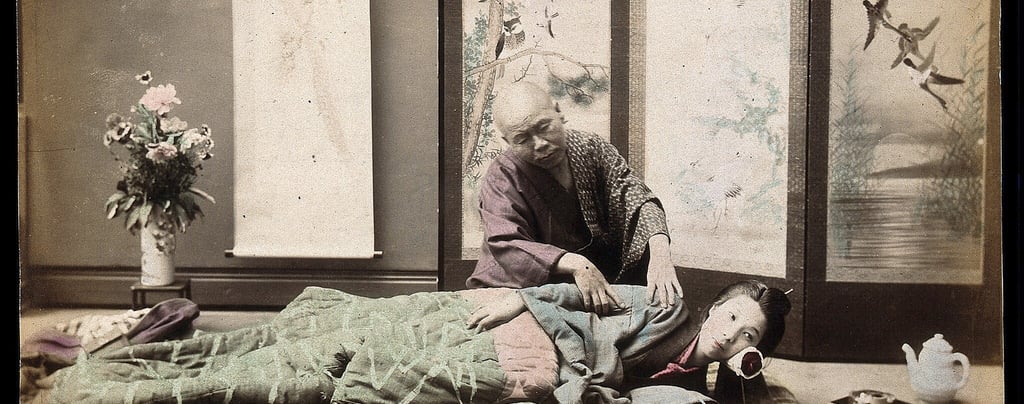
A Japanses women being massaged by a blind man
Opening Hours
Wednesday 9.30am to 7pm
Thursday 9.30am to 7pm
Friday 9.30am to 7pm
Saturdays by appointment
Areas I serve
Macclesfield
Poynton
Stockport
Wilmslow
Alderley Edge
© Claire Feldkamp 2026 |Terms & Conditions | Privacy Policy | Sitemap